Janus Northwest Research
Janus Northwest Research · Bethel, Alaska

Records that follow the patient. Referrals that come back.

We build CareShield, software for Alaska's community health centers. It brings a patient's records together, shows the clinic who is due for care, and follows each referral until the result is back in the chart.

The road system

Specialty care is a long drive away.

The health centers we're building for sit along Alaska's highways, in the Copper River region, Mat-Su and the Kenai Peninsula. Much of the specialty care is in Anchorage, 42 to 179 road miles away. After the visit, the result doesn't always reach the clinic that sent the patient.

01 · Connect records

One record, from many places.

Patients connect their health systems and insurers, such as Epic, Oracle Health, Aetna and Cigna, and get one combined record. On the clinic side, CareShield reads from the EHR the clinic already uses, starting with athenahealth and NextGen.

02 · See who is due

A list of who needs what.

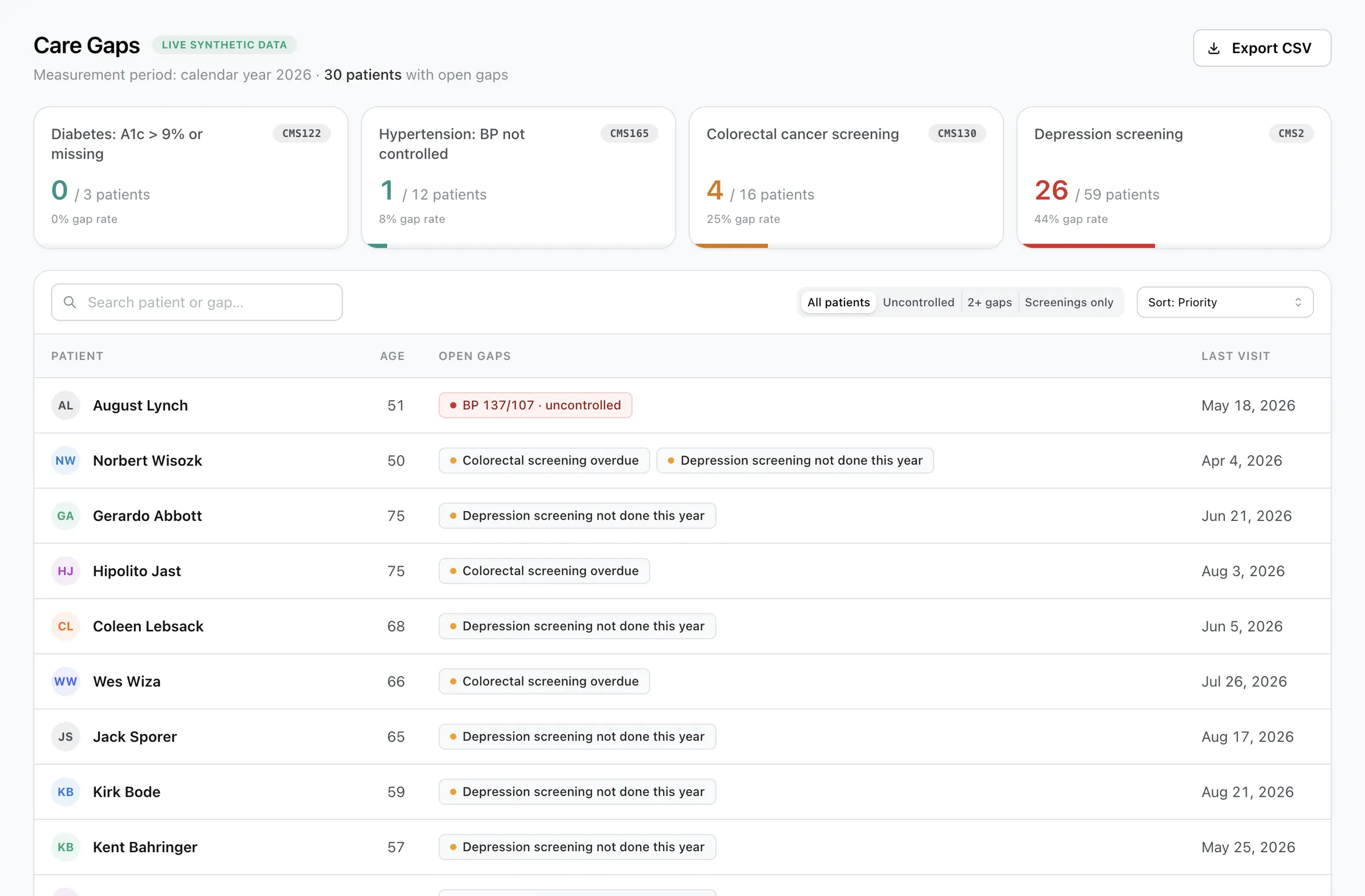
Each patient is checked against four CMS quality measures: diabetes A1c, blood pressure, colorectal cancer screening and depression screening. Staff get a worklist to act on.

Each pin on the map is a made-up patient.

03 · Send the referral

Follow it past the clinic door.

A patient in the Copper River region is referred for a colonoscopy in Anchorage, 179 miles down the Glenn Highway. CareShield follows each step along the way: ordered, sent, scheduled, travel, seen.

04 · Close the loop

Done means the result is back.

A referral isn't finished when it's sent. The gap closes when the report reaches the patient's chart at the clinic that ordered it. Until then, it stays on the list.

Week after week

The same loop, for every patient who is due.

Connect the records, find the gaps, follow the referrals. That is the whole product.

Select a yellow marker to see that part of the app, or a region's sign to follow its road. Drag sideways to look around.
The apps

Two sides of one record

Screens and short clips from the apps. Every patient shown is synthetic.

Clinic side: the Care Gaps page

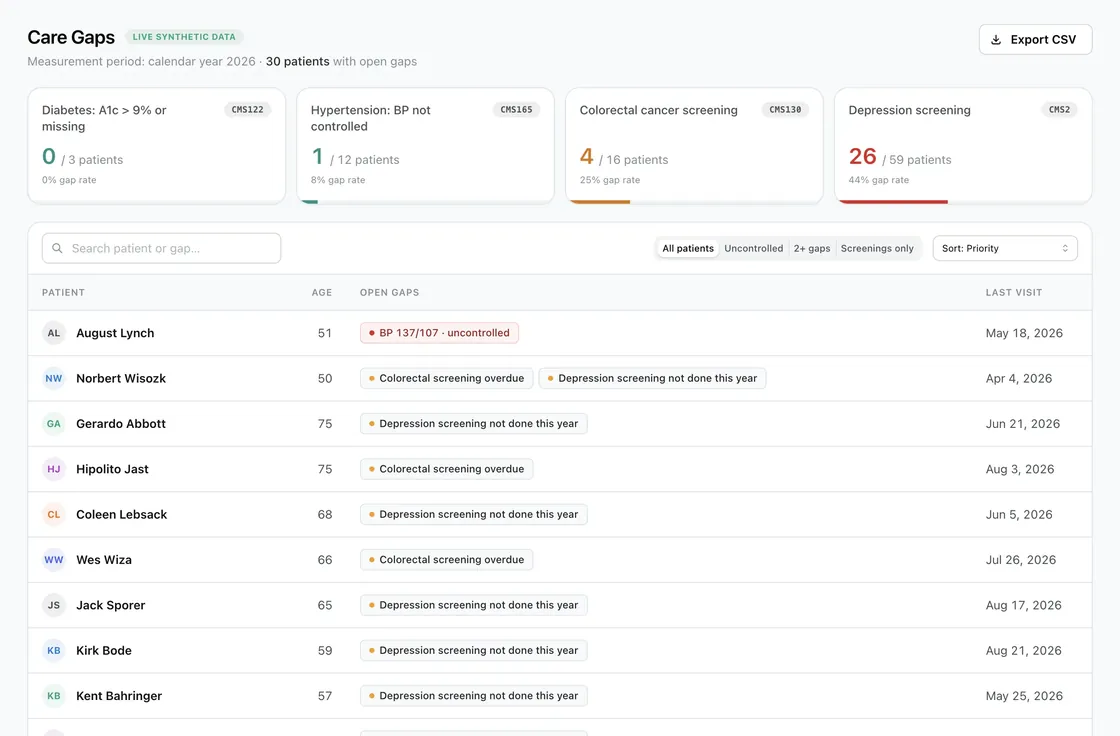
The Care Gaps page: four measure cards showing how many patients are due out of those eligible, above a searchable list of 30 patients with open gaps.
Four measure cards on top, then every patient with something due. Uncontrolled results come first.
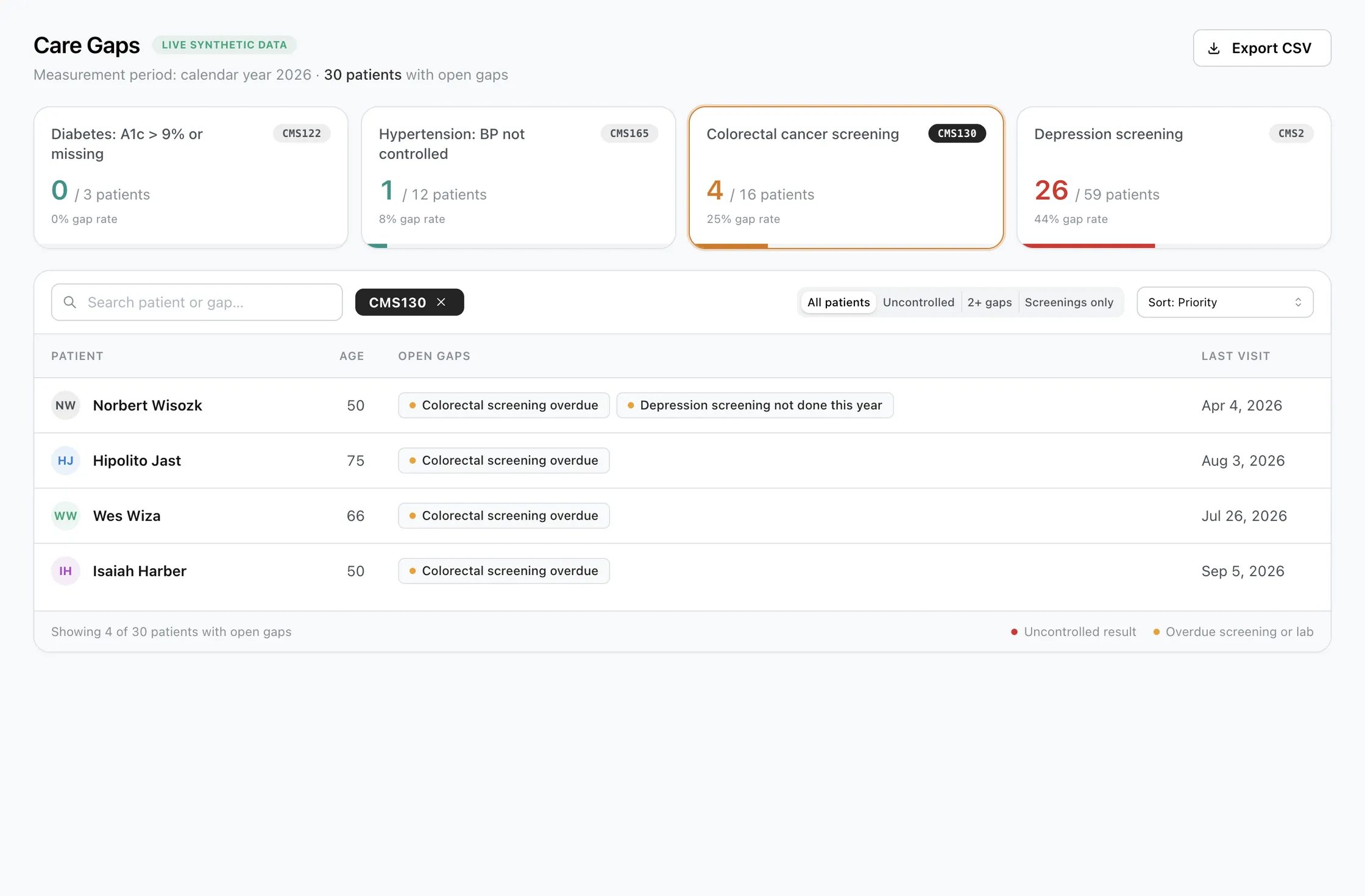
The same page with the colorectal cancer screening card selected, narrowing the list to the four patients due for that screening.
Selecting a measure narrows the list to the patients who are due for it.
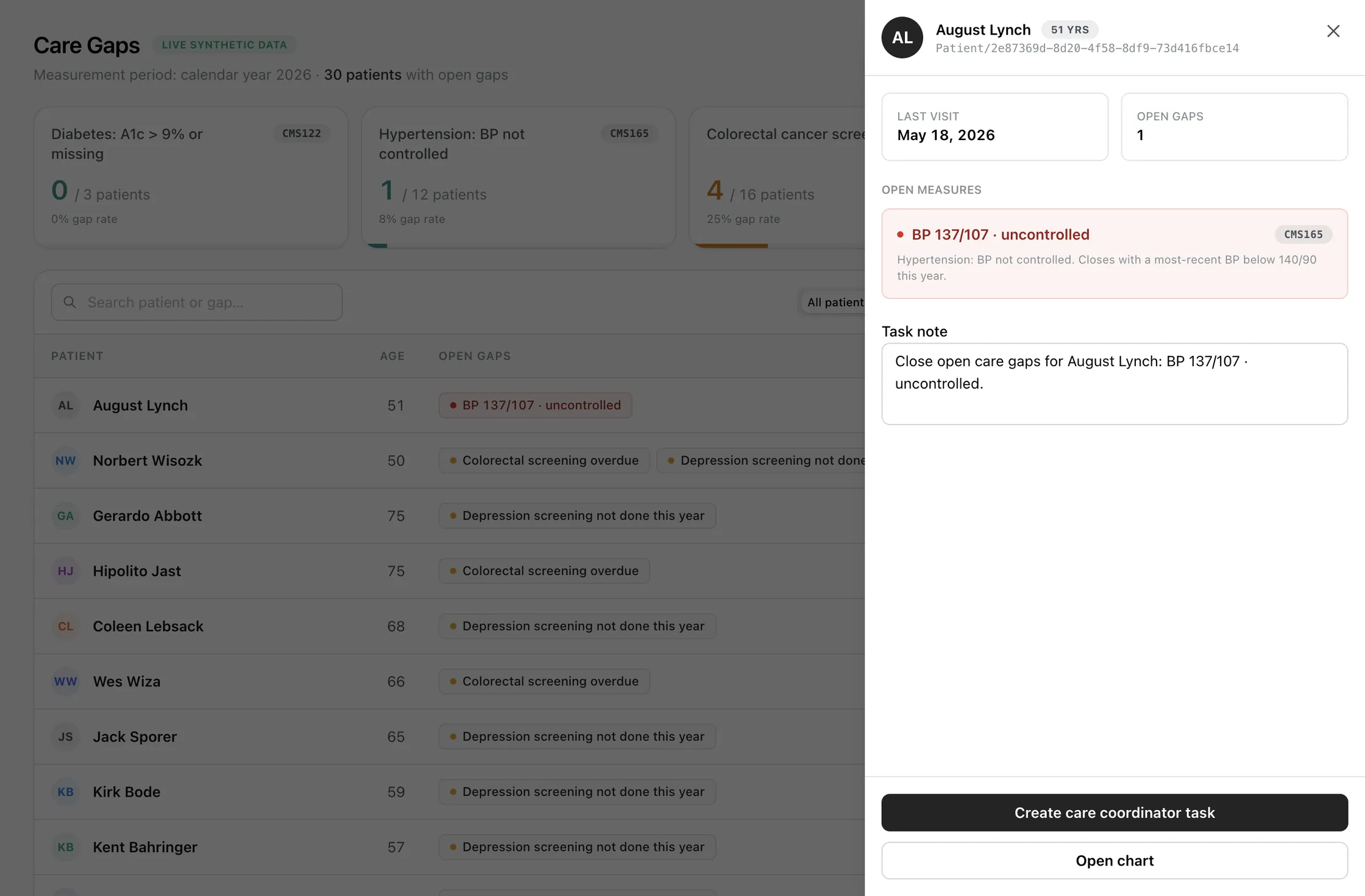
A side panel for one patient showing an uncontrolled blood pressure reading, what would close it, a note field and a button to create a follow-up task.
Opening a patient shows what is open and what would close it, with a note for whoever follows up.

Patient side: the phone app

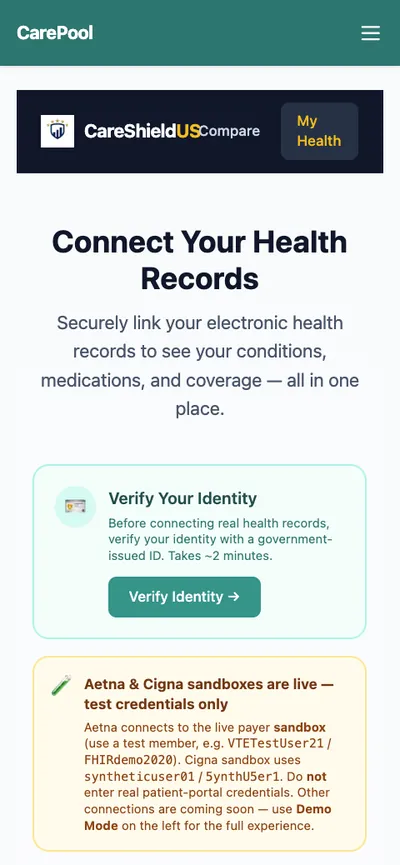
The patient app loading a test patient and showing a combined record with conditions, medications and coverage.
Connect recordsHealth systems and insurers in one record.
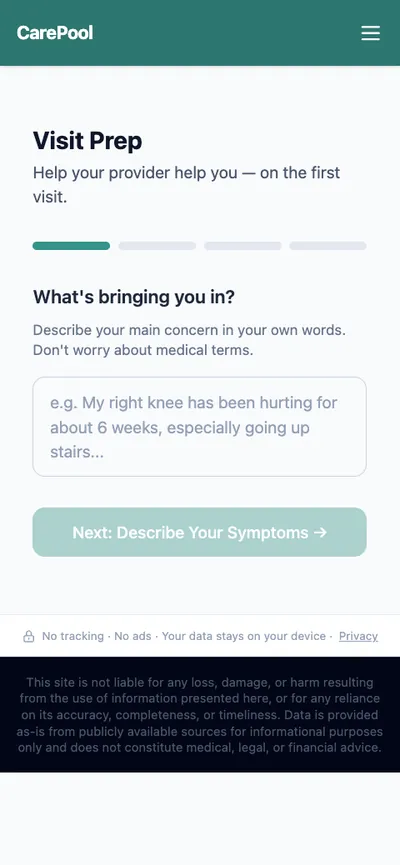
The visit prep screens: the patient describes their concern, then answers questions about how long, how bad and what they have tried.
Visit prepThe patient's story, written before the appointment.
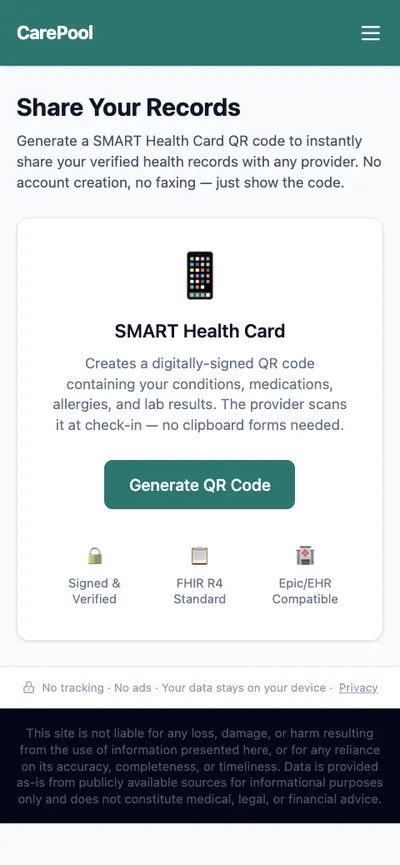
The share screen generating a SMART Health Card QR code. The code is blurred.
Share at check-inA signed QR code the front desk can scan. Blurred here on purpose.
What it does

One record, a worklist, and the referral in between

For the patient, a record they carry with them. For the clinic, a list of who is due and where each referral stands.

For patients

  • Records from health systems and insurers, connected by the patient
  • One combined record: conditions, medications, coverage
  • Upcoming care steps, with a flag when one needs prior authorization
  • Visit prep: the patient's own account of the problem, written before the appointment
  • Sharing at check-in with a signed QR code
  • Sending the record to a provider's EHR inbox by Direct secure message
  • An assistant and a document reader that run on the patient's own device
  • Nutrition guidance from genetics, labs and medications
  • Identity verification before records are connected
  • On the web and on iPhone

For clinics

  • Live dashboards showing patient status and upcoming tasks
  • A read-only connection to the EHR the clinic already uses
  • A care-gap list for four CMS quality measures
  • Measure rates at a glance: how many patients are due out of those eligible
  • Trends over time for each measure, by site and provider
  • Follow-up tasks and a spreadsheet export from the list
  • Referral tracking, from order to result
  • Referral turnaround: how long results take to come back, and which are overdue
  • Outreach by text message and patient portal
  • Year-end UDS quality tables straight from the data
  • Nutrition guidance inside the provider's EHR

We're exploring no-cost pilots for 2027 with rural Alaska health centers, subject to funding and agreements.

The care-gap list

Four measures, and what closes each one

MeasureOn the list whenComes off the list with
Diabetes: A1c CMS122 The most recent A1c is above 9%, or there isn't one this year A most-recent A1c of 9% or lower this year
High blood pressure CMS165 The most recent reading is 140/90 or higher, or there isn't one this year A most-recent reading below 140/90 this year
Colorectal cancer screening CMS130 No screening inside the allowed window Colonoscopy (10 years), CT colonography or flexible sigmoidoscopy (5 years), FIT-DNA (3 years), or FOBT/FIT this year
Depression screening CMS2 No screen tied to a visit this year A screen on the day of a qualifying visit, or up to 14 days before

The logic follows the published CMS specification for each measure.

For health centers

What a pilot would ask of a clinic

  1. A read-only connection to your EHRThrough the interface your EHR vendor already provides. CareShield doesn't write to the chart.
  2. Two agreementsA business associate agreement and a data use agreement, signed before any data moves.
  3. One point of contactSomeone in quality or outreach who can tell us what's useful and what isn't.
  4. A place for the weekly listStaff use the worklist in the outreach they already do.

What the clinic keeps

  • Ownership of its data
  • The ability to switch the connection off
  • Its EHR and its workflows as they are
Data

How we handle it

Patients choose which providers are connected, and can disconnect any of them.

Clinic connections are read-only, and the clinic can turn them off.

We don't sell data, and we don't work for insurers.

The patient assistant runs on the patient's own device.

Questions

Things people ask

Is CareShield an EHR?

No. It reads from the EHR a clinic already uses and adds a care-gap list and referral tracking alongside it.

Which EHRs does it connect to?

On the clinic side, athenahealth and NextGen, plus a view that opens inside the patient's chart in Oracle Health. On the patient side, Epic and Oracle Health, and insurers including Aetna and Cigna. More are planned.

When can a clinic start?

We're exploring pilots with rural Alaska health centers for 2027. If you'd like to be one of them, get in touch.

What would a pilot cost a clinic?

Nothing. The pilots we're exploring are no-cost to the clinic, subject to funding and agreements.

Where can I see the patient side?

At careshieldus.com.

Who is Janus Northwest Research?

A small company in Bethel, Alaska. CareShield is our main work.

Get in touch

If you work at a health center and any of this sounds useful, or sounds wrong, we'd like to hear from you.